It predicts the next word. Then it does it again.
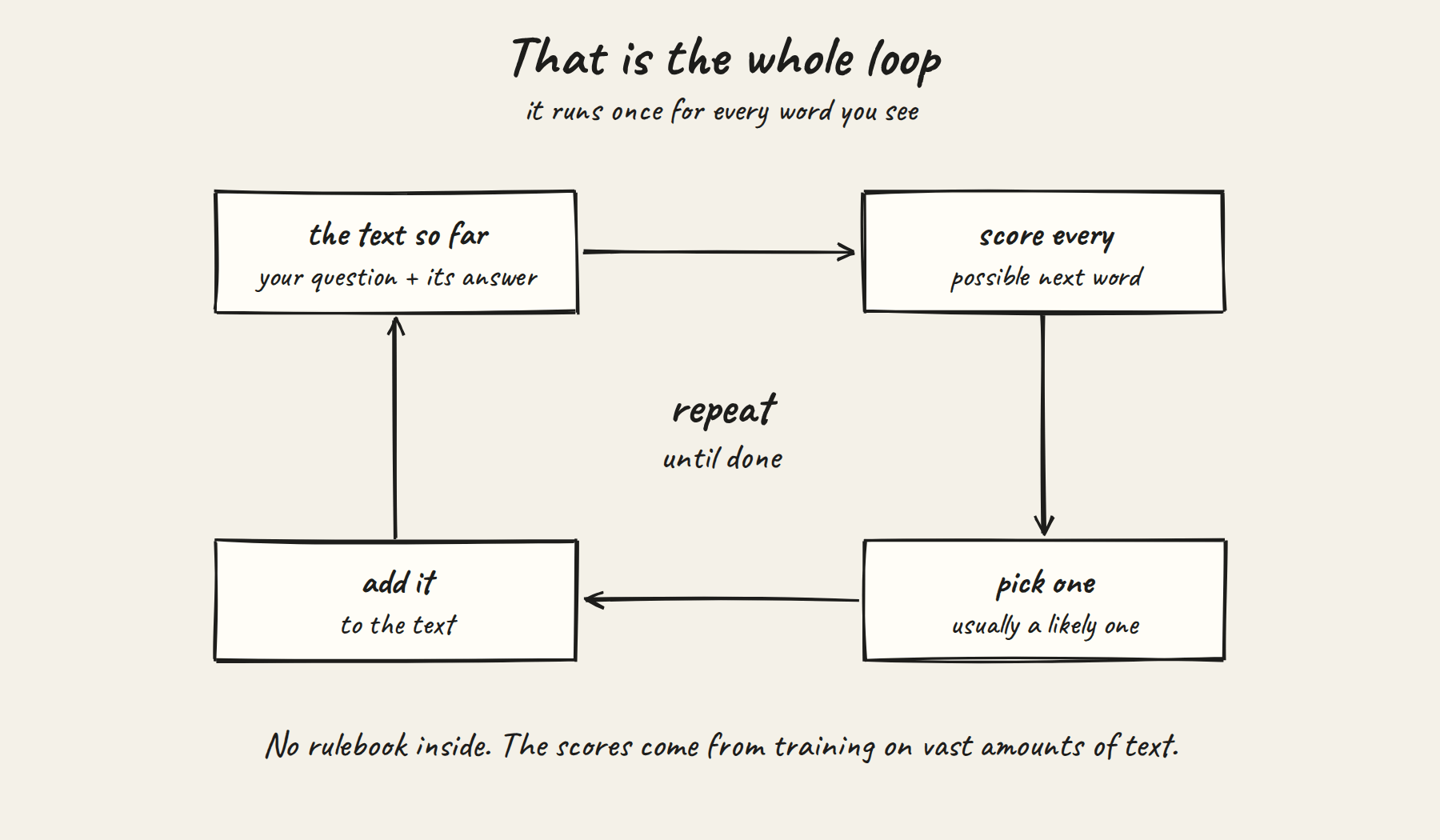
Strip away the jargon and a large language model does one thing. Given the text so far, it gives a score to every possible next piece of text, picks one, adds it, and goes again. The pieces are called tokens, which are words or bits of words. That’s it. That is the machine.

Where do the scores come from? Training. The model is shown vast amounts of text and adjusted, over and over, to get better at predicting the next piece. Nobody writes rules into it. Grammar, facts, legal style and the way arguments usually run all come along as a side effect of getting very good at prediction.
Two things follow that matter for lawyers.
It is not a database. When it writes a case citation, it is not looking anything up. It is producing text that is shaped like a citation. Sometimes that text matches a real case. Sometimes it doesn’t. Give it the actual judgment to read and things improve a lot, but it is still predicting, just from better material.
“Just autocomplete” undersells it. Anthropic’s researchers looked inside Claude while it wrote a rhyming couplet. They expected it to make it up word by word. Instead it picked the rhyming word first and then wrote the line to land on it. Trained one word at a time, but planning further ahead than that.
So: brilliant with language, and no built-in sense of the difference between true and plausible. That gap has a name, and it is the next post.
Sources: The Desk, “It predicts the next word”; Anthropic, Tracing the thoughts of a large language model (2025). The percentages in the first diagram are illustrative, not from a real model.